
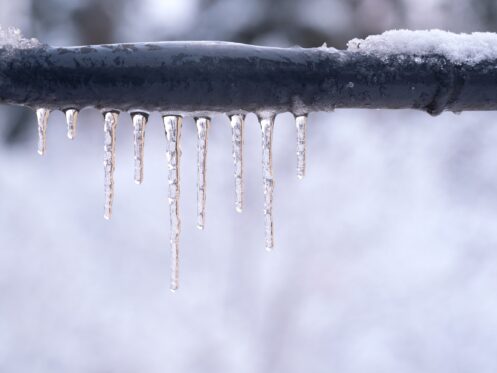
Cold snaps don’t just freeze pipes. They can also create pressure buildup that turns one weak point into a sudden burst, usually at the worst possible time. You might see it start off as a slow flow at one faucet, followed by a loud bang, and then, water where it should never be.
Why Pressure Spikes Happen When Pipes Start to Freeze
When water gets cold, it doesn’t just “sit there” in a pipe. It starts to tighten up and move differently, especially in long runs that pass through colder pockets of the house. If a section begins to freeze, it can create a partial blockage. Water still tries to move through the line when you open a faucet, run a dishwasher, or refill a toilet. That squeeze can raise pressure in the unfrozen section behind the icy spot.
What makes this tricky is that the break often happens away from the frozen area. The ice acts like a plug, and the pressure builds where the pipe still has liquid water. You can end up with a split in a wall cavity or ceiling even though the pipe froze closer to an exterior corner. This is also why a “small freeze” can turn into a major leak once the temperature rises. The pipe may crack during the freeze and dump water when the ice releases and flow returns.
The biggest pressure jump happens when a fixture opens and closes quickly, like a toilet fill valve snapping shut or a washing machine solenoid turning off. That sudden stop can shove water back against the ice plug and rattle the line, which is why some homeowners hear banging before they ever see a leak. If the pipe already has a weak solder joint, an old compression fitting, or a brittle plastic section, that stress can turn a close call into a split.
The Spots That Trap Cold Air and Create Stress Points
Most burst pipes don’t happen in the middle of a warm room. Instead, they take place where cold air sneaks in and hangs around. Think about a sink base cabinet on an exterior wall, especially one with a large cutout where supply lines and the drain disappear. That opening can pull cold air from the wall cavity and chill the shutoff valves and supply tubes. Crawl spaces, garages, attic chases, and rim joist areas also create the same problem. The house feels fine to you, yet those zones run colder and stay colder longer.
Pressure trouble shows up faster in these locations because they often include fittings and tight turns. Elbows, tees, and shutoff valves create small chokepoints where flow changes direction. If ice starts forming, it tends to build up at those restrictions first. Older hose bib lines and pipes that run close to foundation vents are another repeat offender. If you have ever opened a cabinet and felt a cold draft around the plumbing, treat that as a warning sign, not a weird quirk of the house.
How Closed Valves and “Dead Ends” Add to Winter Pressure
Your plumbing has sections that don’t see steady movement during the winter months. A shutoff valve for a rarely used bathroom, a capped line from an old remodel, or a hose bib branch that sits idle can become a dead end. Water inside that section cools down faster because it is not mixing with warmer water moving through the system. If freezing starts in a dead end, the ice can creep back toward the main line and create pressure problems where you least expect them.
Another pressure issue comes from partially closed valves. A main valve or a branch valve that never fully opens can restrict flow, which changes how pressure behaves when multiple fixtures run. You might notice it when someone showers and another person runs the kitchen faucet, and the flow suddenly swings. In winter, those flow swings can hit harder because cold water lines are already stressed by low temperatures. A plumber can check valve operation, confirm the valve is seating correctly, and spot abandoned branches that invite freezing and pressure buildup.
Why Water Pressure Settings Matter More in Winter
Some homes run at higher pressure than they should year-round, then winter makes the downside show up. High pressure can strain supply lines, faucet cartridges, toilet valves, and icemaker connections. It also makes a freeze event riskier, because the system starts closer to its limit. If an ice plug forms, the pressure behind it can climb faster, and the pipe has less room to “forgive” the stress.
You might see signs of high pressure without realizing what you’re looking at. Faucet drips that return after repairs, a toilet that keeps running through fill cycles, or washing machine hoses that fail early can all connect back to pressure that is too aggressive. If you have a pressure-reducing valve, it can wear out and stop holding a stable setting. If you do not have one, the home may be taking whatever pressure the municipal supply gives at that moment. A plumber can measure pressure under real conditions, check for spikes, and correct the issue before winter adds freeze stress to the mix.
When to Stop Troubleshooting and Call a Licensed Plumber
There is a point where simply monitoring the situation becomes risky. If multiple fixtures lose cold-water flow or if you see frost on an exposed pipe, treat it as urgent. If you smell sewage near a drain during a freeze event, you may have a line issue that needs professional attention, not repeated flushing. If you see water stains growing or a ceiling spot that looks like it is holding moisture, assume the leak is active.
Pressure problems also show up at the weakest connections. Supply stops under sinks, washing machine hoses, and water heater connections can fail when pressure spikes hit. If you hear loud banging when a fixture shuts off, or a new buzzing near valves, don’t keep testing different faucets to “see what happens.” A licensed plumber can locate the cold section, relieve pressure safely, check for damage, and repair the weak points before the thaw turns a crack into a flood.
Come Up With a Real Winter Plan
Winter pipe stress often comes from a combination of freezing risk, pressure swings, and weak shutoffs or aging fittings that cannot handle the strain. At Childers Air Plumbing & Electric in Beckley, WV, we help with winterization checks, pipe insulation, shutoff valve repairs, pressure regulator evaluations, leak detection, and emergency burst pipe repairs when things go sideways fast. If you want to prevent a pressure buildup situation before the next cold snap hits, call Childers Air Plumbing & Electric to schedule a service appointment.