
When spring transitions into early summer, homeowners in West Virginia face a noticeable increase in severe weather activity. May begins peak thunderstorm season, which brings heavy rain, strong winds, and frequent lightning. These conditions combine to create the perfect environment for electrical surges that can damage the electronics and appliances in your home and possibly affect its wiring system.
Simultaneously, rising temperatures result in increasing air conditioning use, putting more strain on your home’s electrical system. This increases the chances of internal surges.
You need to understand why May is such a high-risk period for West Virginia homes in terms of power surges. However, it’s also useful to know how whole-home surge protection can keep your property safe and your systems operating smoothly.
Why May Is Peak Surge Season in West Virginia
May is a transitional month in terms of climate conditions. Cooler air masses linger and collide with warm, humid air. This combination creates conditions ideal for frequent thunderstorms across the state. These storms commonly develop between the late afternoon and early evening after daytime heating reaches its peak.
Lightning is a primary cause of external power surges. Even a single lightning strike landing near a utility transformer or power line can send a surge of electricity into the local grid, possibly getting into nearby homes. These surges can travel through infrastructure and wiring in a fraction of a second before overloading circuits and damaging sensitive electronics.
Lightning isn’t the only threat to power infrastructure; heavy rain and strong winds can be equally disruptive. Falling branches can bring down lines, and transformer issues add another layer of risk of sudden voltage fluctuations. These irregularities increase the likelihood of surges entering your home, particularly during active storm periods.
The Role of Afternoon and Evening Storm Patterns
West Virginia thunderstorms are most common late in the day. Temperatures rise throughout the afternoon, resulting in atmospheric instability and storm development. Between late afternoon and early evening, conditions are often ideal for producing lightning storms.
The timing is crucial because it overlaps with peak household energy use. With many people at home during these hours, households start using lighting systems, electronics, and appliances. Simultaneously, air conditioning systems are operating at full capacity to combat the daily heat. Surge risk increases when active storm conditions overlap with high electrical demand. When external lightning surges combine with the internal strain already on your home’s electrical system, the potential for damage increases significantly.
How Lightning Causes Dangerous Power Surges
Lightning strikes are powerful and unpredictable. A direct strike can involve millions of volts of electricity, but even an indirect strike can cause significant damage. When lightning hits the ground surrounding your home or near power lines, it can induce a voltage spike that travels through electrical systems.
Such a surge can enter your home through power lines, but it can also travel through cable connections or plumbing systems. Once inside, a power surge can travel through your home’s circuits rapidly, seeking paths to ground. Along the way, a surge can damage anything connected to your electrical system if it doesn’t outright destroy it.
If proper protection isn’t in place, certain technologies, such as computers, televisions, and smart home systems, are particularly vulnerable. Damage isn’t always immediately visible, and repeated exposure to smaller surges can degrade components over time, eventually resulting in premature failure.
Increased AC Usage and Internal Surges
With temperatures rising in May, air conditioners are in constant use. These systems need a substantial amount of power to operate, particularly when they cycle on and off all day. This high demand can itself create internal power fluctuations in your residence. The largest surge in power occurs when an air conditioner starts up, and this sudden demand can cause brief voltage spikes or drops that affect other appliances and devices on the same circuit. Over time, these internal surges shorten the lifespan of electronics by subjecting them to repeated stress. Homes without proper surge protection are particularly vulnerable in times of increased AC use and storm-related power instability.
What Whole-Home Surge Protection Does
A whole-home surge protection system can safeguard your entire electrical system from sudden voltage spikes. Installed at the main electrical panel, it acts as a barrier between your home and any incoming surges coming down the utility line.
When a surge occurs, the system diverts excess voltage into the ground safely. That prevents it from reaching your electronics and appliances. This protection applies to external surges from lightning and manages internal surges generated inside your home.
Unlike a basic power strip, a whole-home system delivers comprehensive coverage for all circuits. Your in-built electronics, HVAC systems, and large appliances all get the same level of protection as your smaller devices.
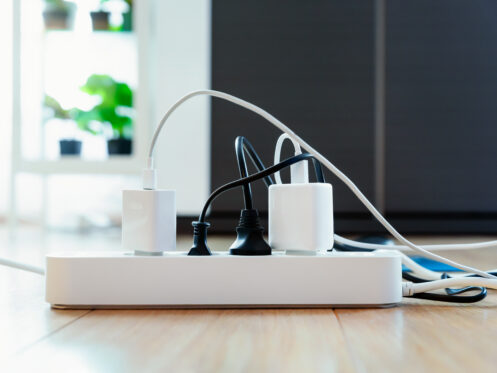
Power strips and plug-in surge protectors offer some level of protection, but they are limited in effectiveness and scope. While they might handle various minor surges, they may not be able to stop a large spike caused by grid issues or local lightning strikes. Also, they protect only the devices plugged right into them; the rest of your home remains vulnerable.
That’s not to say plug-in surge protectors and power strips aren’t useful. When point-of-use devices are used in conjunction with whole-home surge protection, you can create a layered defense. The combination is a reliable solution, particularly in the high-risk weather activity of May.
Reducing the Risk of Electrical Fires
While preventing power surges can spare you the expense of replacing everything from smart thermostats to your refrigerator, it can also prevent serious safety hazards. Excess voltage can damage insulation, overheat wiring, and increase the risk of an electrical fire. Surges are more frequent during storm season, making this risk more pronounced. Overloaded circuits or faulty wiring can quickly escalate into dangerous situations if you don’t manage them properly. By controlling and redirecting excess voltage, whole-home surge protection minimizes the risk of overheating and fire. This additional layer of safety is crucial during months of high electrical demand and frequent storms.
A Smart Investment for Storm Season and Beyond
May is a month when you remember how quickly weather conditions can impact your property. Thunderstorms are becoming more frequent, and rising temperatures drive higher energy use. Both increase the risk of power surges.
As storm season approaches every year, it’s increasingly important to protect your home by taking the right steps. Whole-home surge protection is a proactive solution to threats, both external and internal. Investing in this technology reduces the likelihood of expensive damage, improves safety, and maintains the performance of your home’s electrical systems.
You can trust Childers Air Plumbing & Electric for reliable electrical services and solutions, ranging from light switches and power outlets to rewiring, electrical panels, generators, and EV charger service.
Schedule a consultation with Childers Air Plumbing & Electric to learn more about surge protection for your home in Beckley.